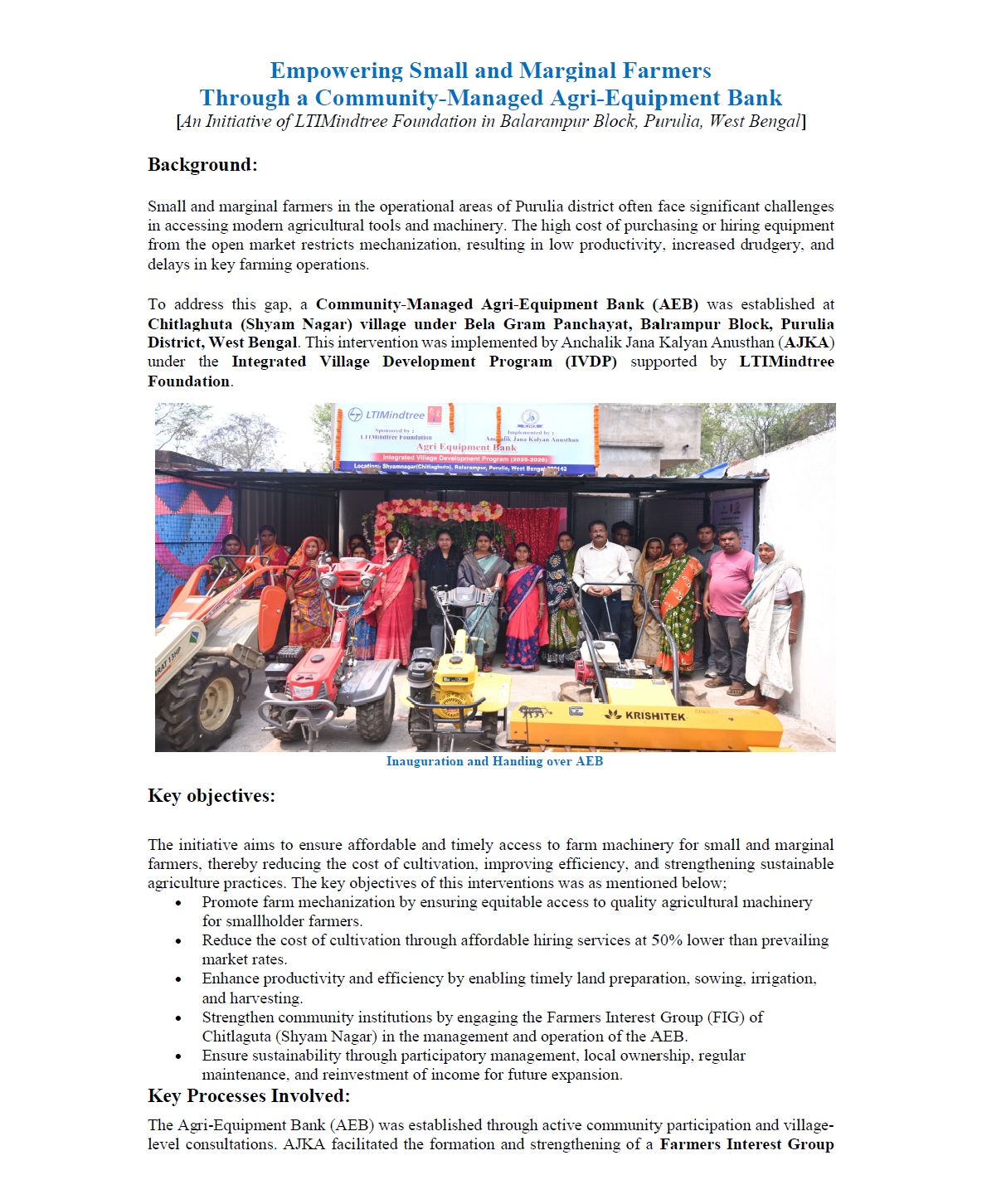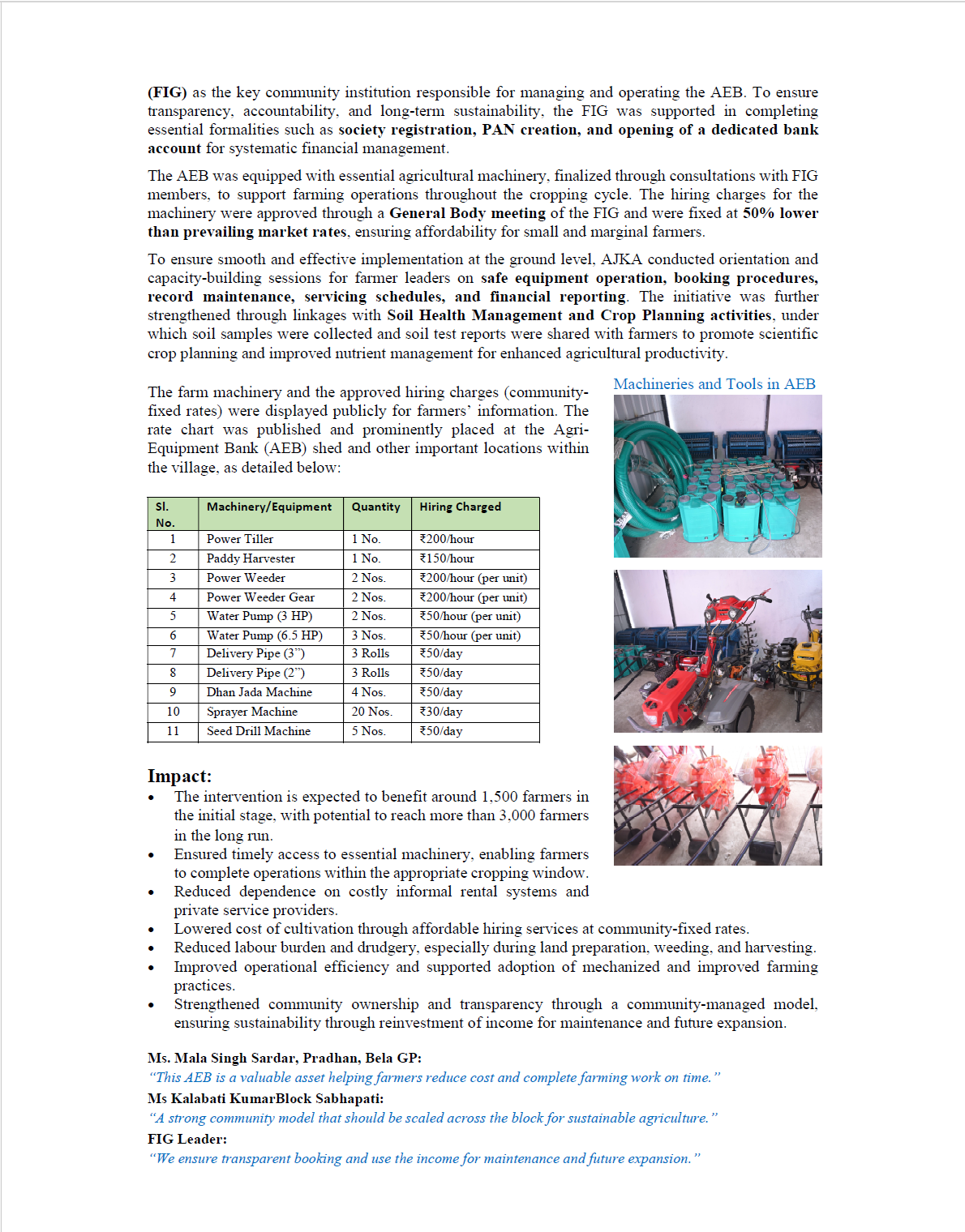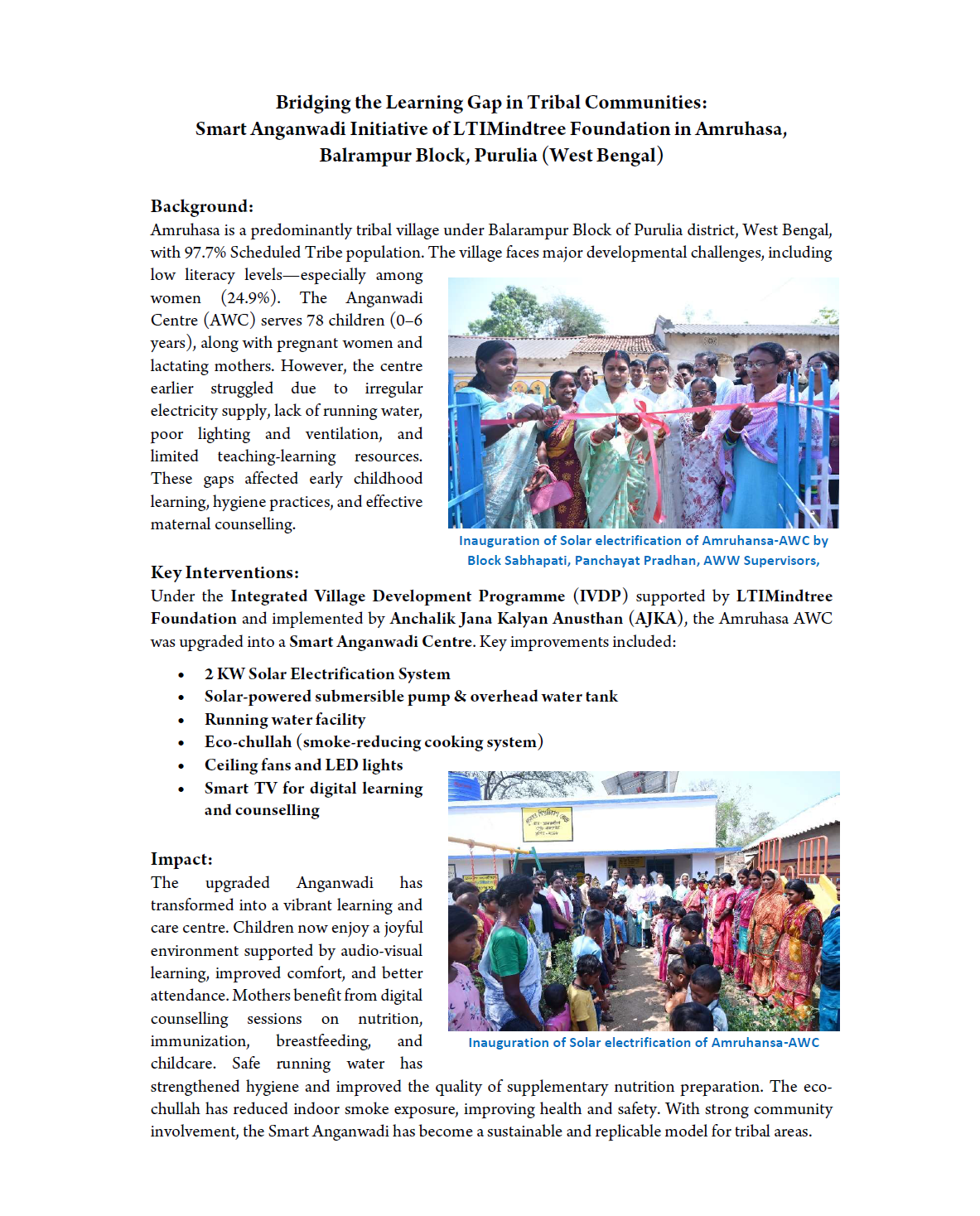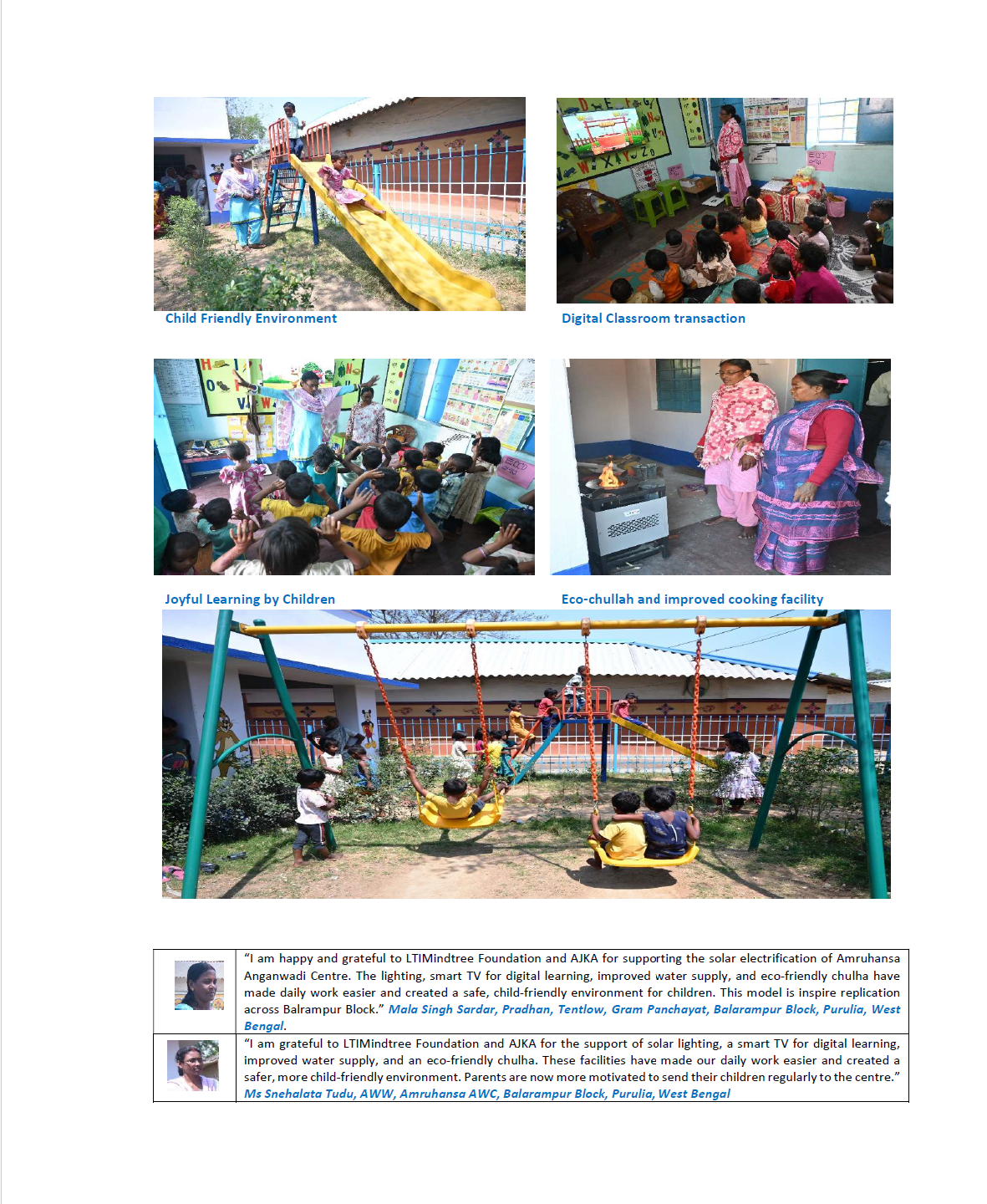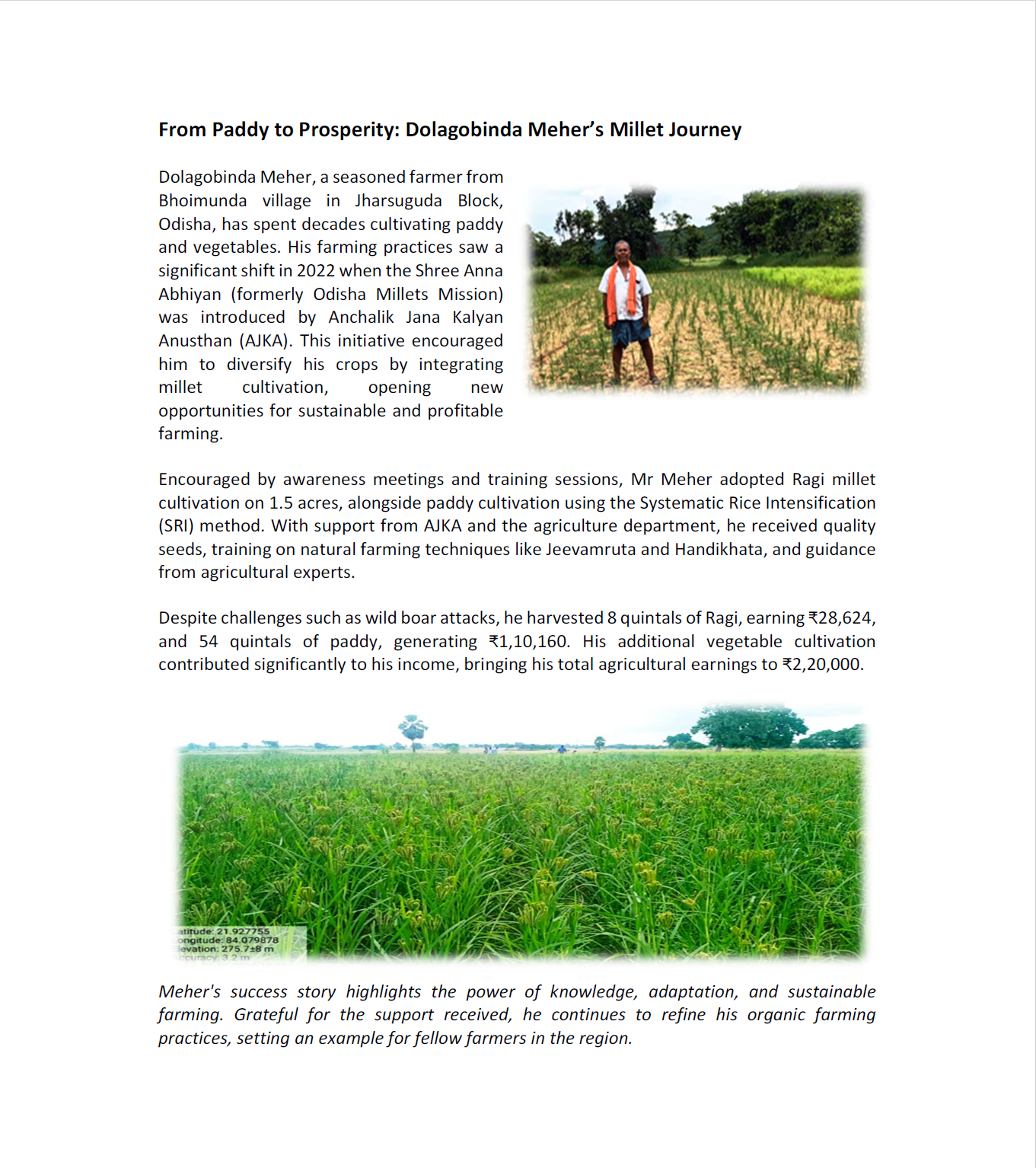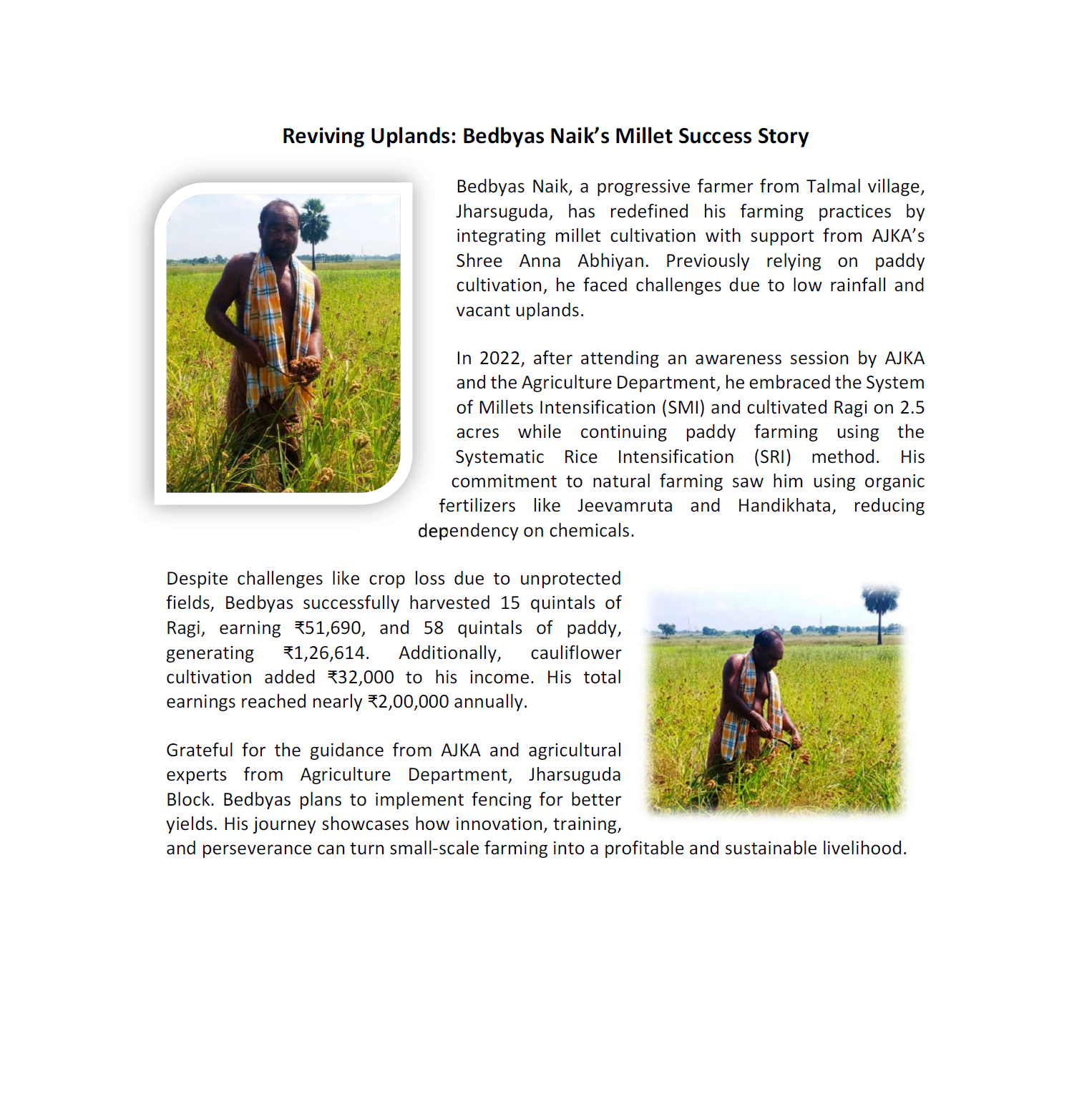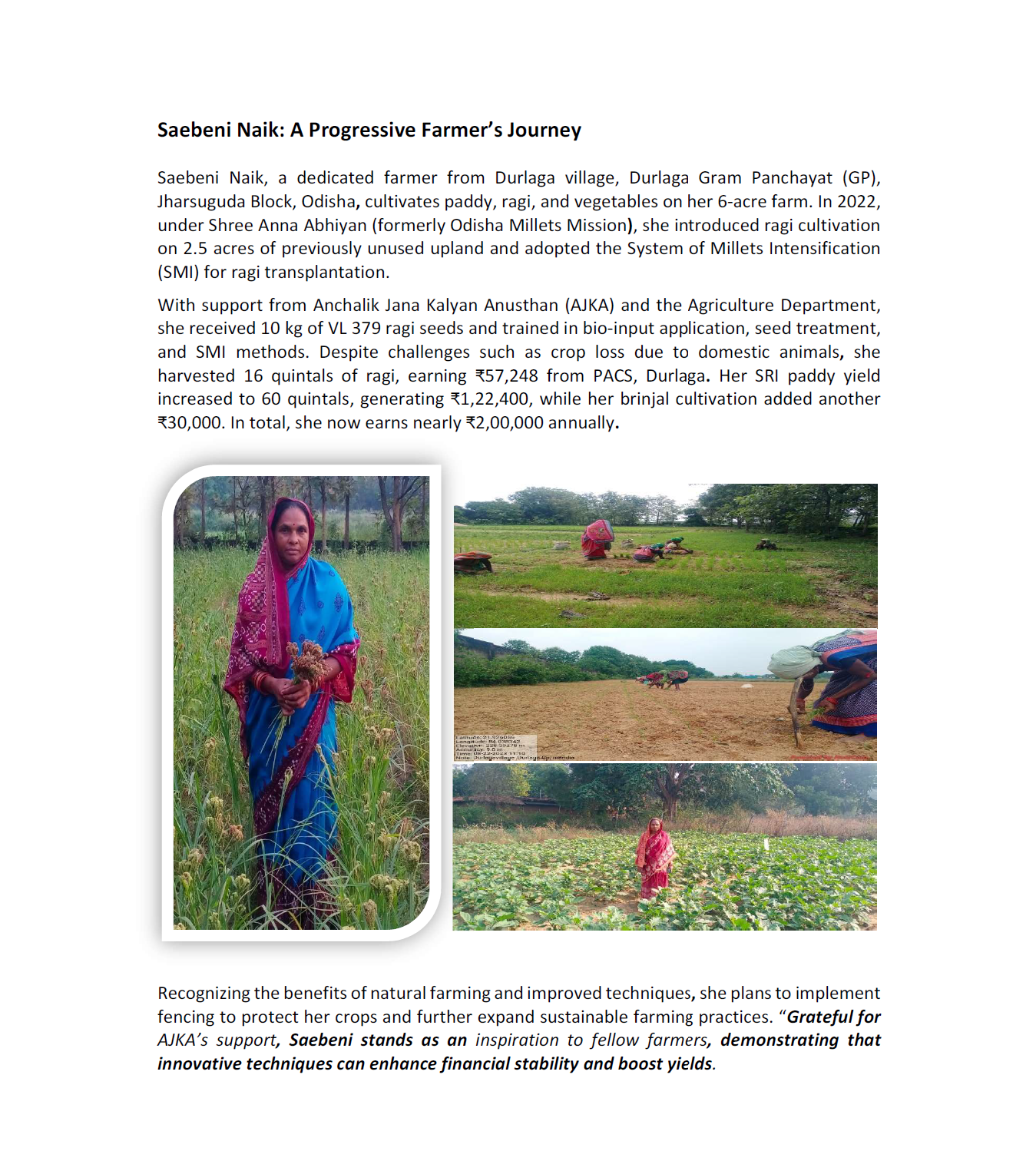

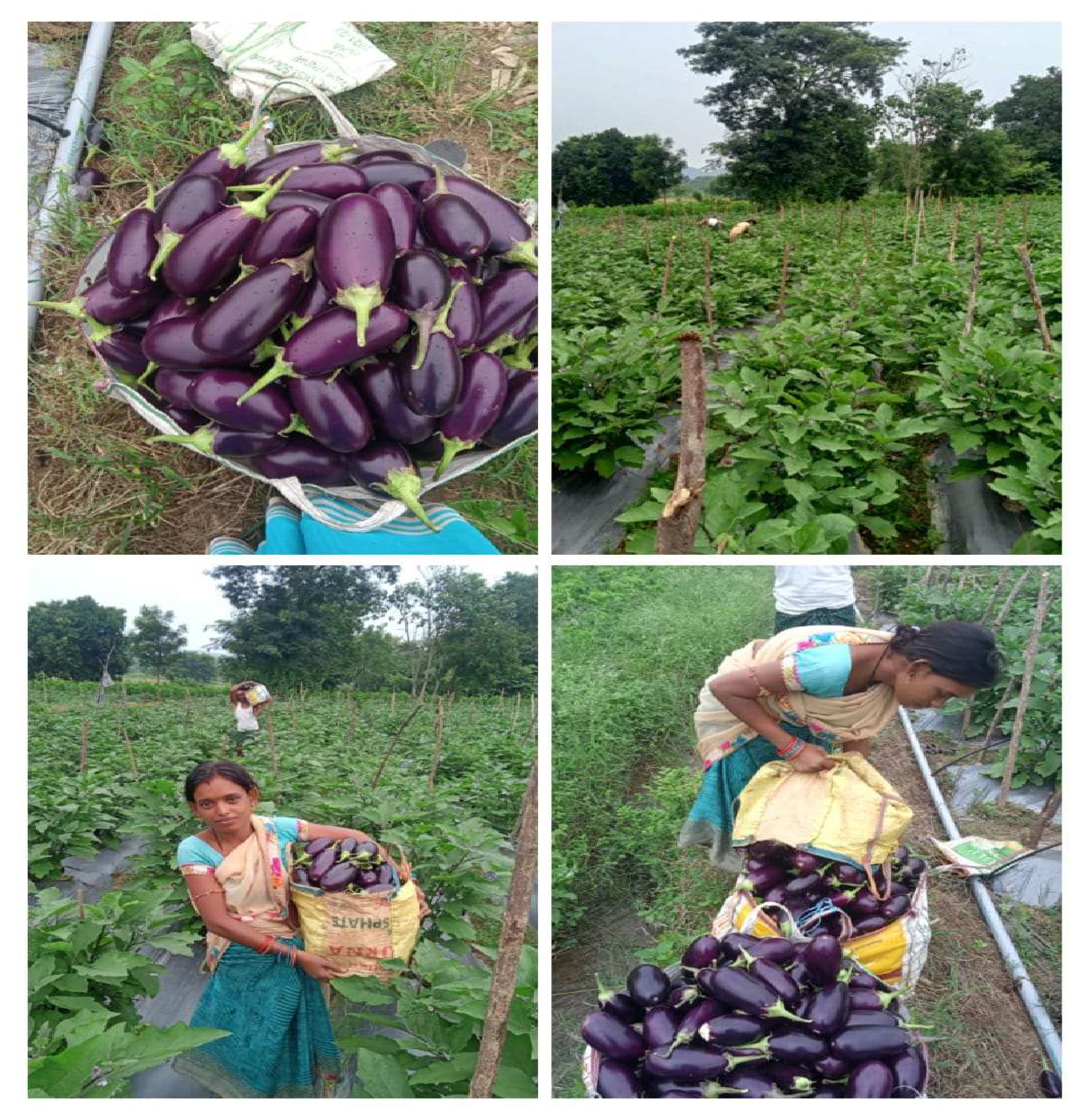
"From Cowpea to Prosperity: Kalpana Khamari’s Journey with Grafted Brinjal Cultivation"
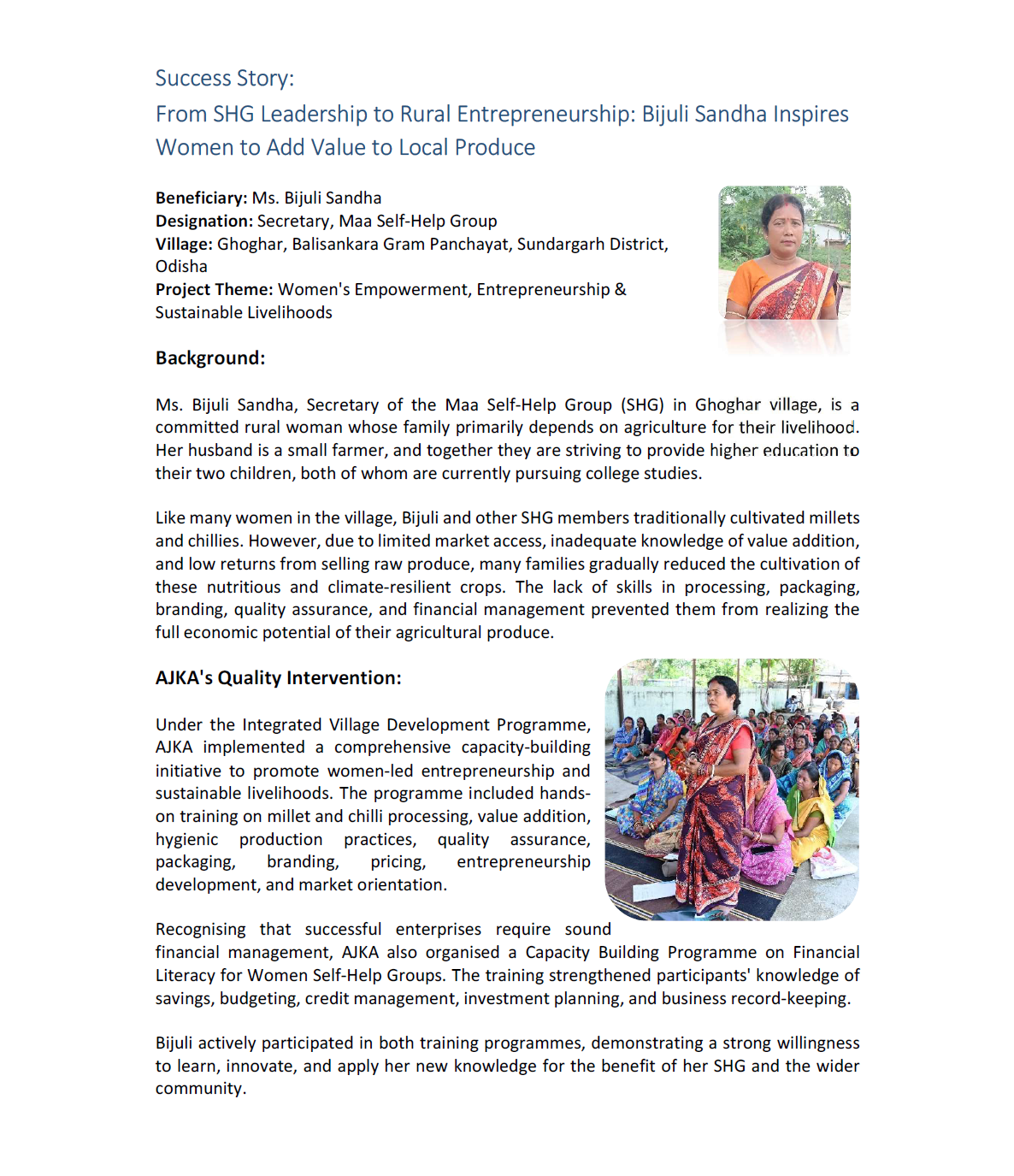
Kalpana Khamari, a farmer from Kushmel village, Lakhanpur Block of Jharsuguda District, transformed her farming through the Agricultural Production Cluster (APC) Project, implemented by AJKA with support of DMF (District Mineral Fund) and Mission Shakti. The project supports farmers with modern techniques, quality inputs,mobilizing them into Producer Company and market linkages across 26 villages in Lakhanpur Block.
Previously cultivating cowpea on one acre, Kalpana adopted grafted brinjal on 0.8 acre after APC’s intervention. With improved skills and innovative practices, reduced cultivation costs, and assured seed availability, her total investment was ₹20,000. This shift yielded a remarkable profit of ₹2.3 lakh in one season.
Grateful for AJKA-APC Project’s support, Kalpana’s success has inspired 20 other farmers in her community, showcasing the impact of modern agricultural practices on income and livelihoods.
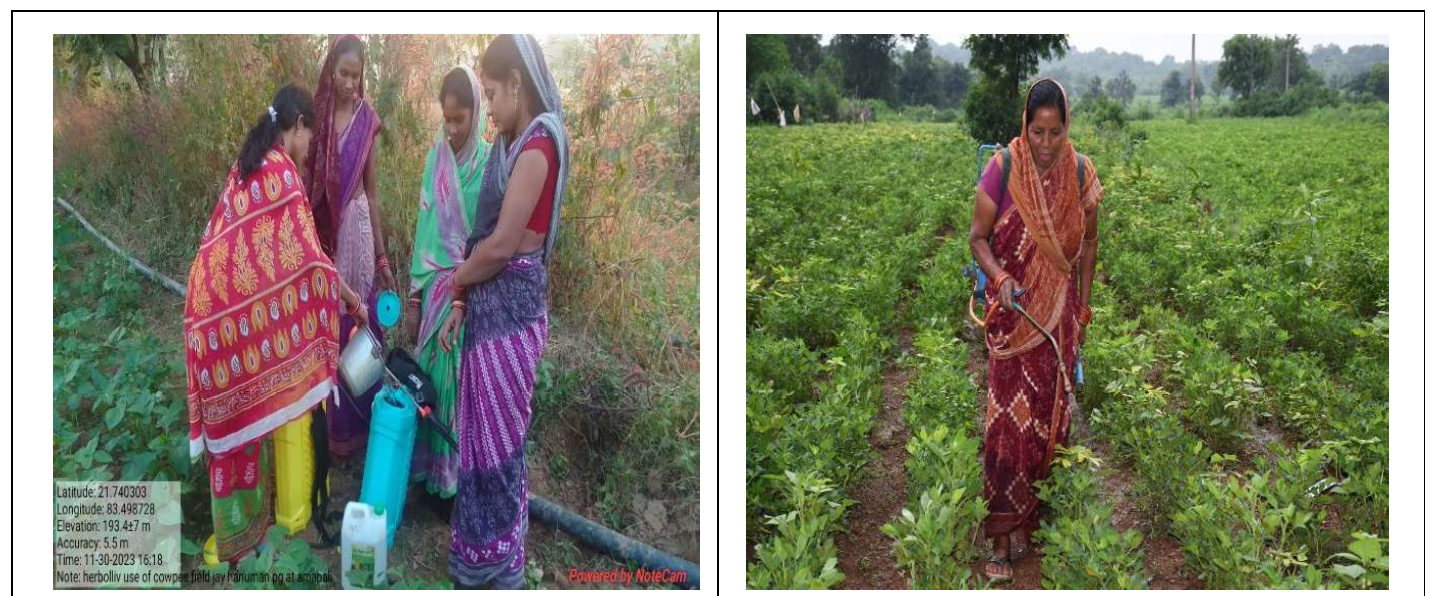
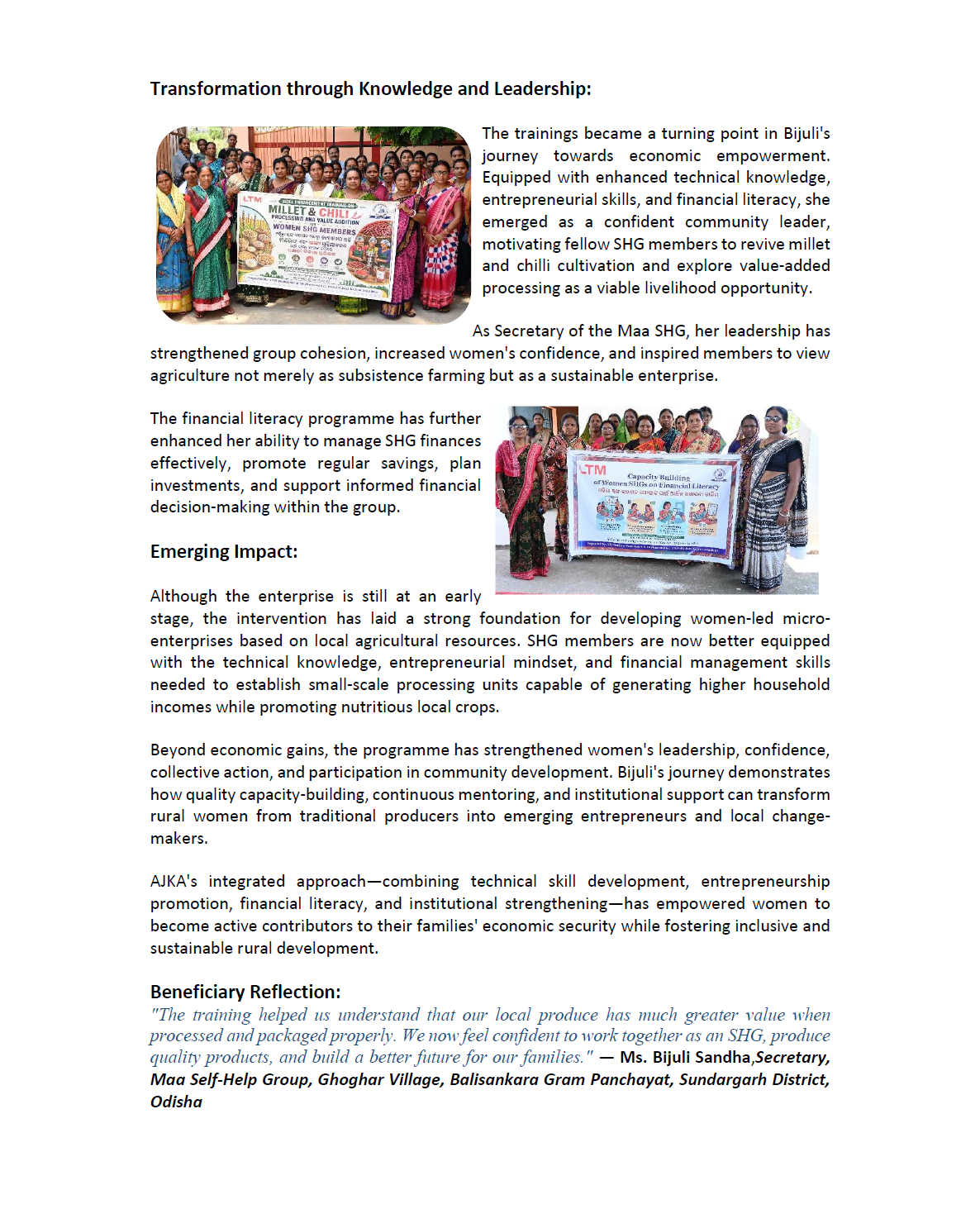
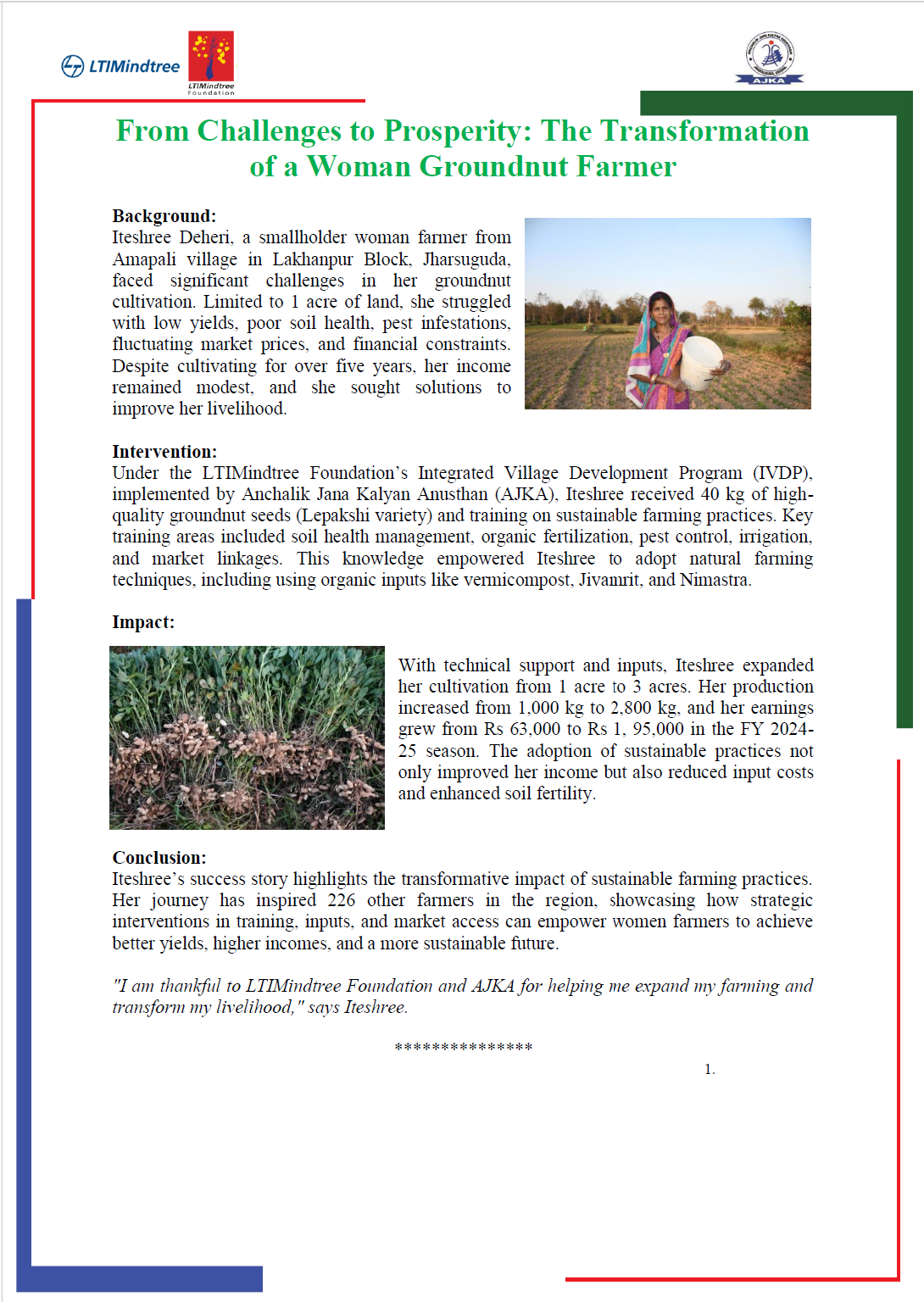
"Protecting Crops, Securing Livelihoods: Itishri Deheri’s Success with Herboliv Plus"
The Agricultural Production Cluster (APC) Project, supported by DMF and Mission Shakti,
has significantly impacted farmers in Lakhanpur Block of Jharsuguda District in Odisha. One
such success story is that of Itishri Deheri, a farmer from Amapali village in Pithinda GP, who
struggled with loss in groundnut cultivation due to wild animals attack on her 2.5-acre
farmland.
Before APC’s intervention, Itishri faced recurring crop damage, resulting in financial setbacks.
However, the introduction of Herboliv Plus, an organic medicine to prevent wild animals
movement in the farmland, changed her farming experience. By using this solution, she
successfully protected her crops, ensuring a better yield and financial stability.
This simple yet effective innovation not only helped Itishri secure her harvest but also
improved her income and overall livelihood. Her success highlights the importance of
sustainable agricultural solutions in empowering farmers and enhancing rural prosperity.
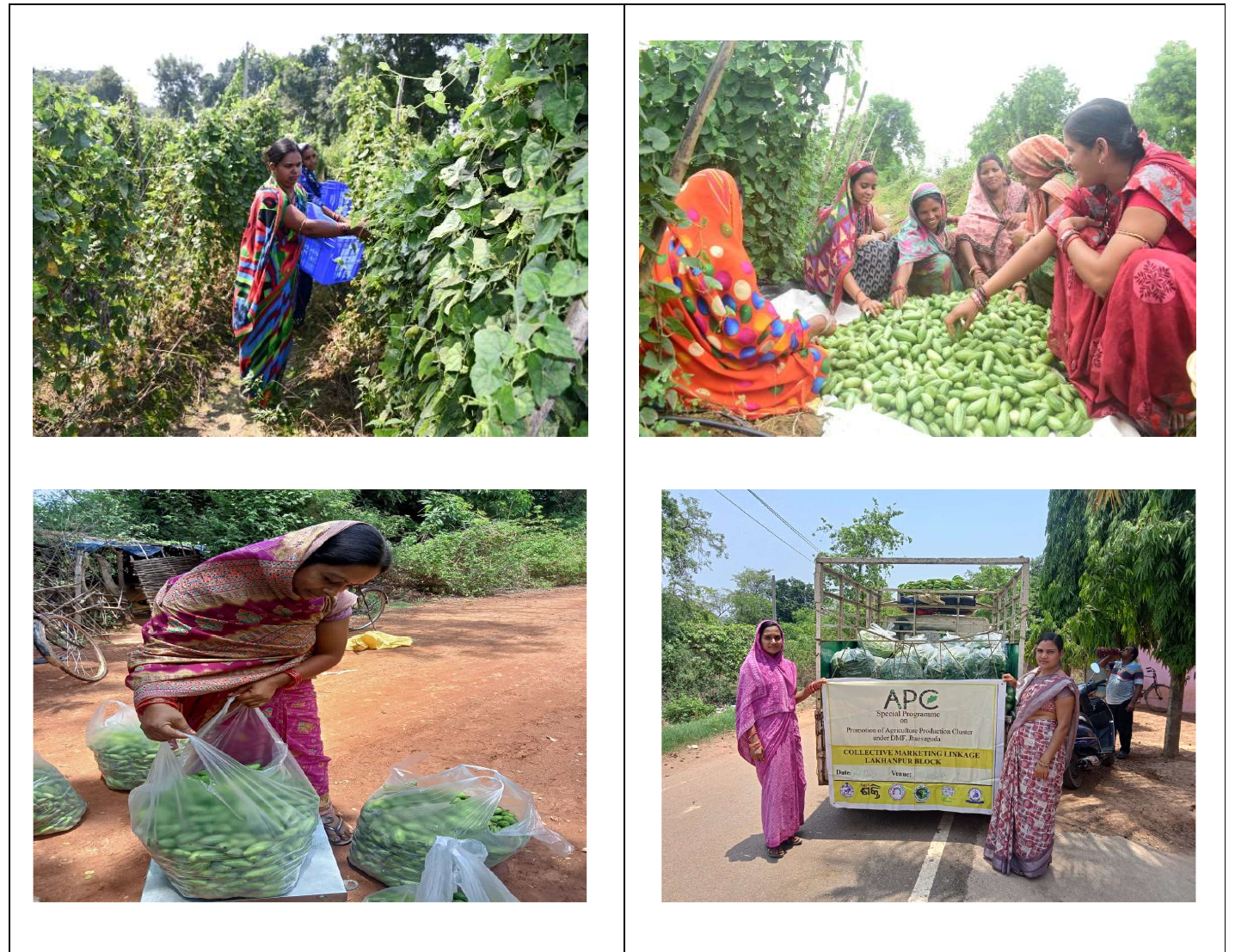
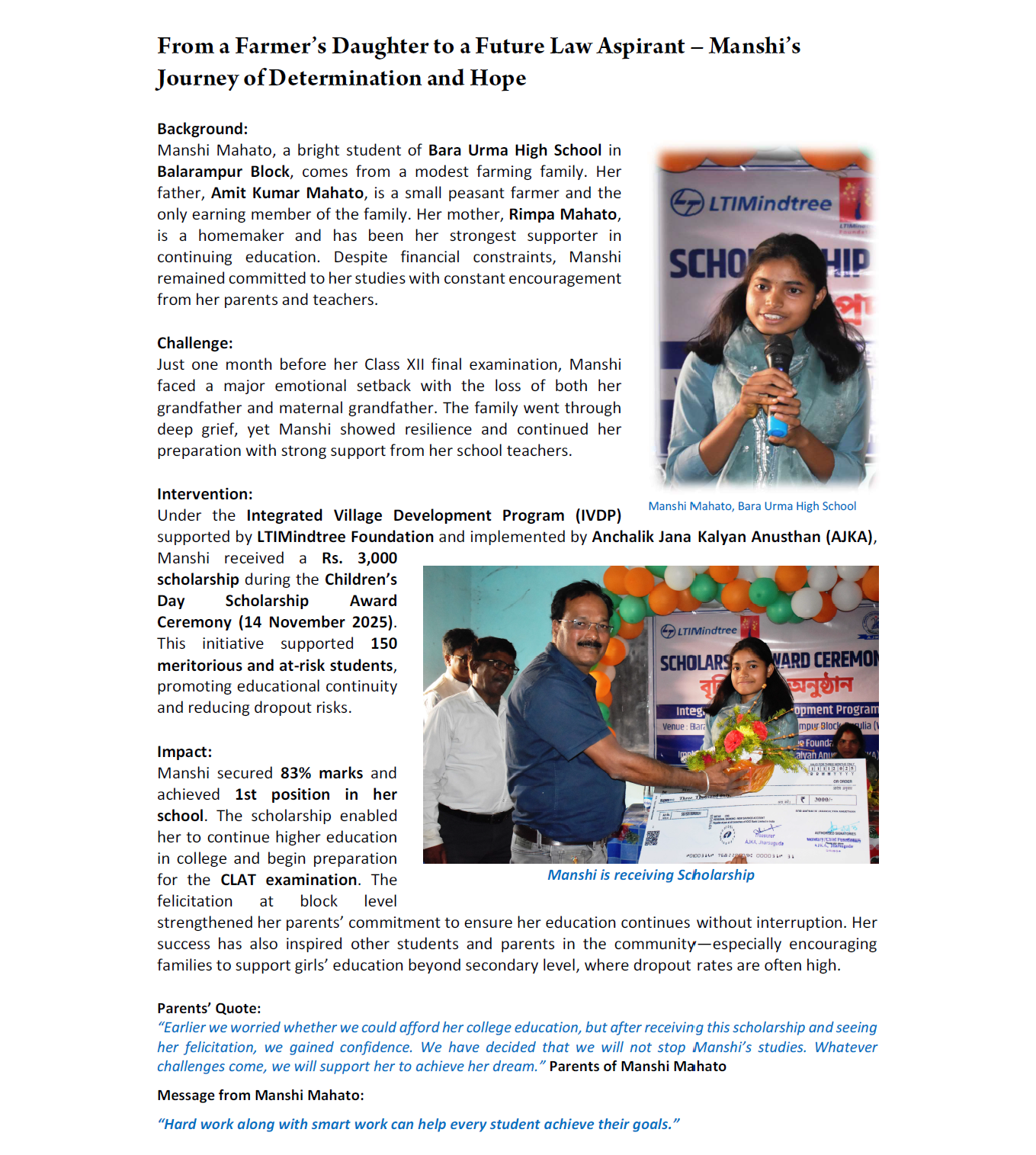
"Transforming Pointed Gourd Cultivation: The Success of Omm Sai Producer Group"
The Agricultural Production Cluster (APC) Project, implemented by AJKA and supported by
DMF Jharsuguda, has significantly impacted farmers in Lakhanpur Block by promoting
sustainable agricultural practices. In Baddhara village, farmers traditionally cultivated pointed
gourd but struggled with low yields, lack of knowledge, and middlemen exploitation, selling
produce at just ₹15 per kg.
To address these challenges, Omm Sai Producer Group (PG) was formed, consisting of 169
farmers. Through APC’s training, farmers adopted modern practices such as line transplanting
and proper spacing, improving productivity. Cultivation expanded from 5 acres (400 quintals
production) to 12 acres in a cluster approach (960 quintals production), generating a total
income of ₹28.8 lakh. APC also provided quality seeds, vermi-compost, and technical training
in collaboration with the Agriculture and Horticulture Departments.
By organizing collective marketing, Omm Sai PG supported farmers ignoring the middlemen,
ensuring fair prices. Additionally, a shareholder connection drive linked 46 farmers, raising
₹46,000 for further development. Within two years, farmers’ income doubled, with sales rising
from 40,000 kg (₹6 lakh) in 2023-24 to 96,000 kg (₹28.8 lakh) in 2024-25.
This initiative empowered farmers with financial independence, entrepreneurial skills, and
efficient market linkages, demonstrating that organized farming and value chain integration
can transform rural livelihoods. The photos are depicting this success story.
Success Story 1: Farm Pond Brings New Hope for Year-Round Farming – Transforming Rural Livelihoods
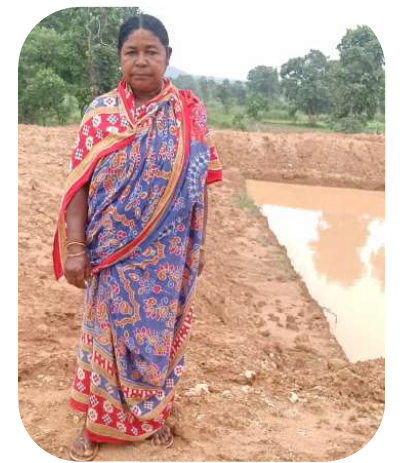
Beneficiary: Ms. Shreemati Guru
Village: Goghar, Balisankara Gram Panchayat, Balisankara Block, Sundargarh District, OdishaTheme: Environment & Climate-Resilient Agriculture
Background:
Agriculture has been the primary source of livelihood for Ms. Shreemati Guru and her family. However, like many smallholder farmers in Goghar village, she relied entirely on monsoon rainfall for crop cultivation. Irregular rainfall, prolonged dry spells, and the absence of irrigation infrastructure often resulted in low agricultural productivity, restricting cultivation to a single cropping season and limiting the family's annual income.
Intervention of IVDP-Balisankara:
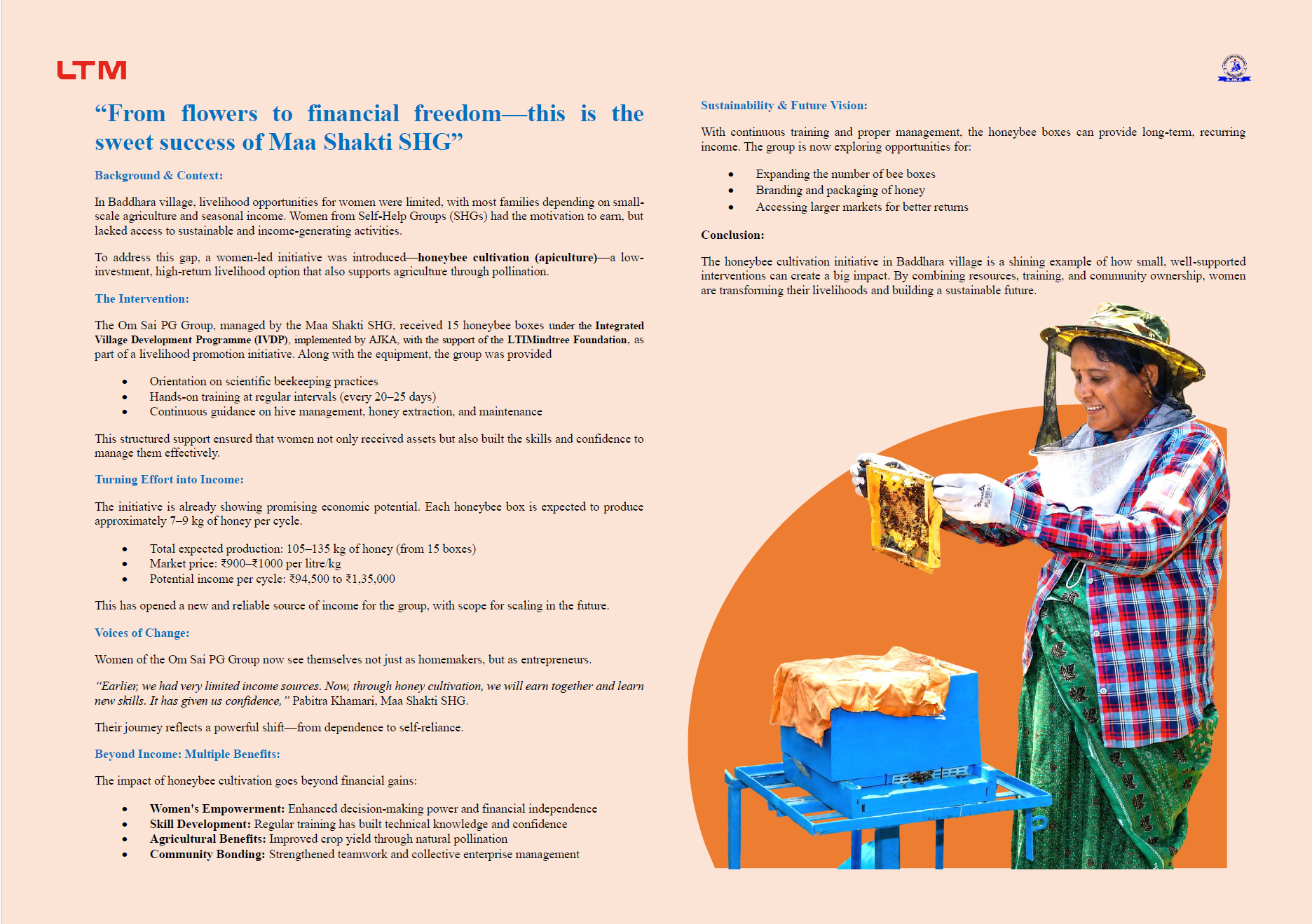
Under the Integrated Village Development Programme (IVDP), supported by LTIMindtree Foundation, Anchalik Jana Kalyan Anusthan (AJKA) facilitated the construction of a scientifically designed farm pond as part of its climate-resilient agriculture initiative. The intervention was implemented through a participatory approach involving beneficiary farmers, Gram Panchayat representatives, and technical guidance from the Agriculture Department.
The farm pond captures and stores rainwater, ensuring protective irrigation during critical crop growth stages while contributing t o groundwater recharge and promoting sustainable water resource management. Throughout the process, AJKA provided technical supervision, community mobilisation, and continuous field-level support to ensure quality implementation and community ownership.
Results and Emerging Impact:
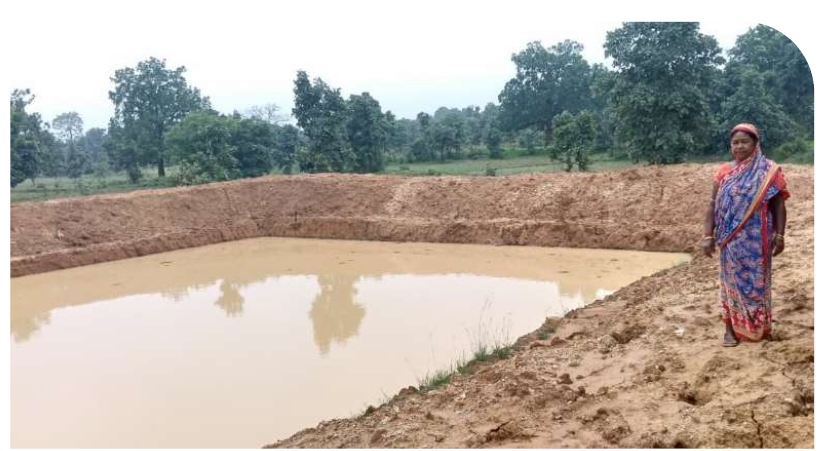
The newly constructed farm pond has significantly improved Ms. Shreemati Guru's confidence in farming. With reliable access to irrigation, she is now preparing to cultivate commercial vegetables and an additional rabi crop, reducing her dependence on uncertain rainfall and creating opportunities for enhanced household income.
The intervention is expected to provide protective irrigation to approximately 7–8 acres of agricultural land, directly benefiting her family while motivating 12 neighbouring farmers to adopt multiple cropping practices and invest in improved water conservation measures. The farm pond has also strengthened community awareness on climate adaptation and reinforced the importance of maintaining shared natural resource assets for long-term sustainability.
The intervention demonstrates how strategic investments in climate-resilient infrastructure can improve agricultural productivity, strengthen livelihood security, and build resilience among small and marginal farming households.
Beneficiary Reflection:
"Earlier, we waited helplessly for the rains and worried about our crops every season. Today, the farm pond has given us a dependable source of water and renewed confidence to grow vegetables and cultivate an additional crop. I now believe that my family can look forward to a more secure and prosperous future."
— Ms. Shreemati Guru, Goghar Village, Balisankara Block, Sundargarh District, Odisha