Agriculture & Livelihood
Cutting out the middleman — how 169 farmers grew income fivefold
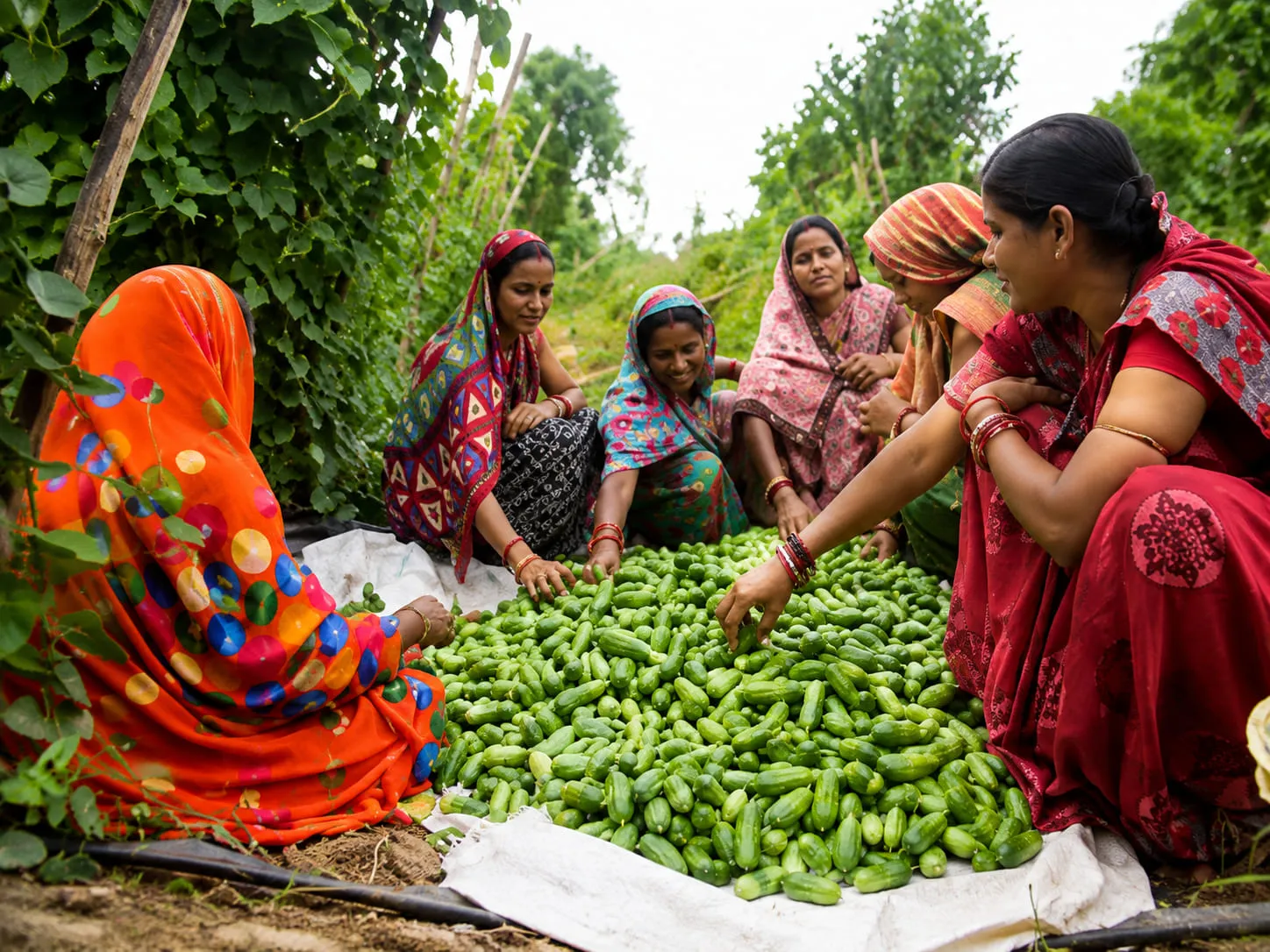
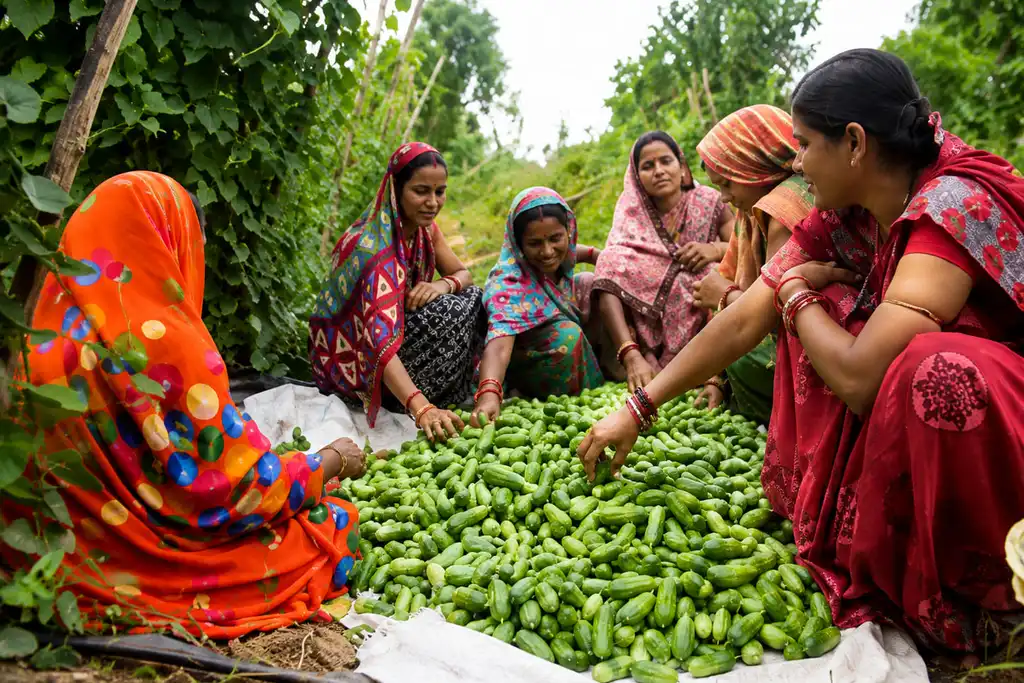
Women of the Omm Sai Producer Group grading a pointed gourd harvest beside the trellised field it came from
- Farmers in the group
- 169Farmers in the group
- Income, 2023-24 to 2024-25
- ₹6L → ₹28.8LIncome, 2023-24 to 2024-25
- Area under cultivation
- 5 → 12 acresArea under cultivation
Baddhara's farmers had grown pointed gourd for years and stayed poor at it. Organised into a producer group with direct market access, they turned ₹6 lakh a year into ₹28.8 lakh.
Farmers in Baddhara had cultivated pointed gourd for as long as anyone could remember. Yields were low, technical knowledge was thin, and every kilo went through a middleman who paid ₹15. Long experience of a crop is not the same as a living from it.
Organising the cluster
Through the Agricultural Production Cluster (APC) project, supported by DMF Jharsuguda, AJKA brought 169 farmers together as the Omm Sai Producer Group and worked with them on a cluster approach:
- Better practice. Training in line transplanting and correct spacing, which is where most of the yield gain came from.
- Better inputs. Quality seed and vermi-compost supplied through the project.
- Technical backing. Training coordinated with the Agriculture and Horticulture Departments.
- Collective marketing. The group sells together, direct — no middlemen.
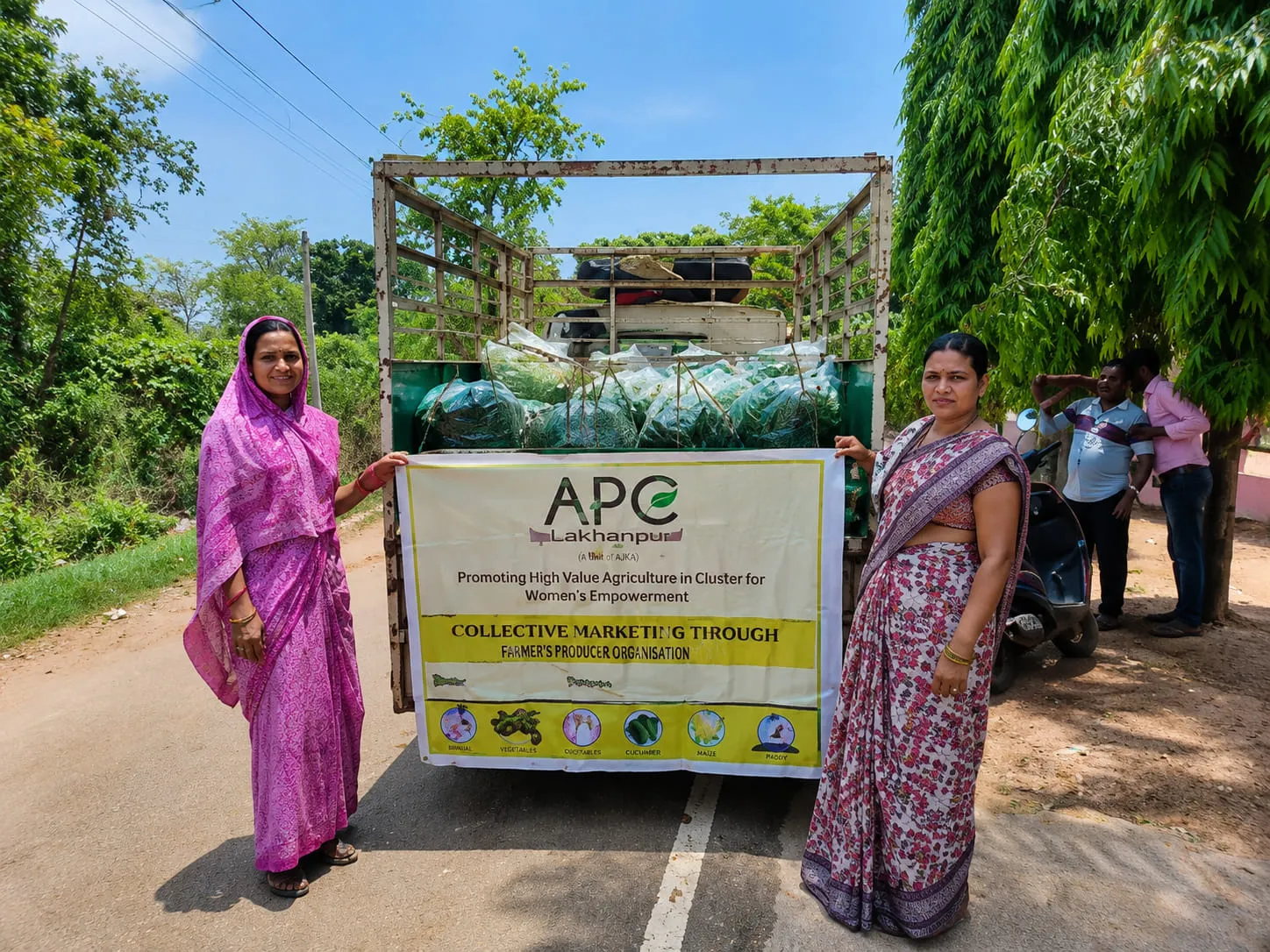
A shareholder connection drive linked 46 farmers and raised ₹46,000 towards the group’s own development, so the enterprise has capital of its own rather than depending on the next grant.
What changed in two years
Cultivation expanded from 5 acres to 12. Production went from 400 quintals to 960. Sales rose from 40,000 kg to 96,000 kg — and because the group was now selling direct at a fair price rather than through an intermediary, revenue grew faster than volume did: from ₹6 lakh in 2023-24 to ₹28.8 lakh in 2024-25.
Farmer incomes doubled inside two years.
The lesson is not complicated. Yield improvements got them more to sell. Organising the marketing is what let them keep the value of it.
Beyond the balance sheet
Baddhara now has something it did not have before: a farmer-owned body that can negotiate, hold capital, and take a decision on behalf of 169 households. That capacity outlasts any single season’s crop.