Climate Resilience
Now water comes with the sun
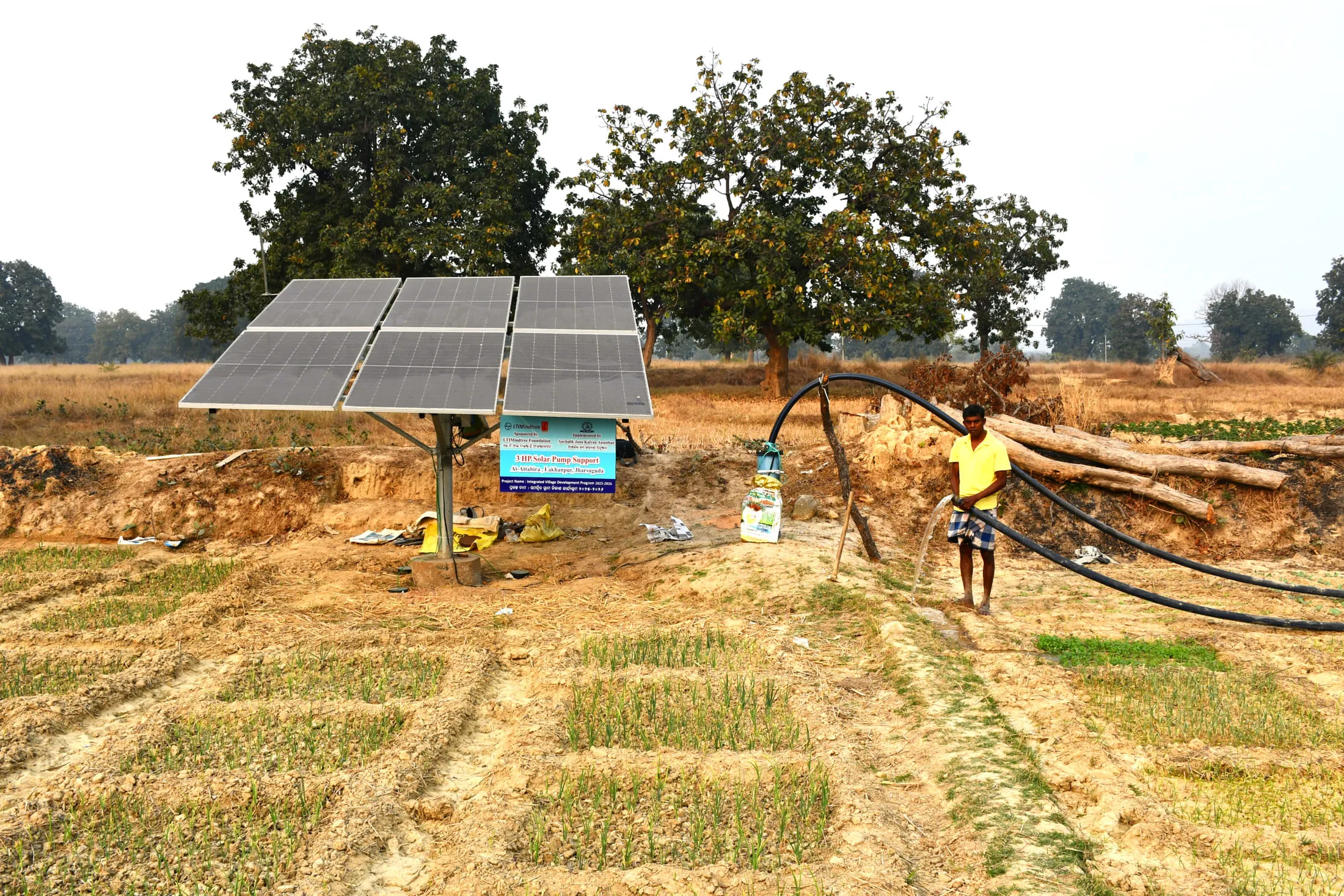
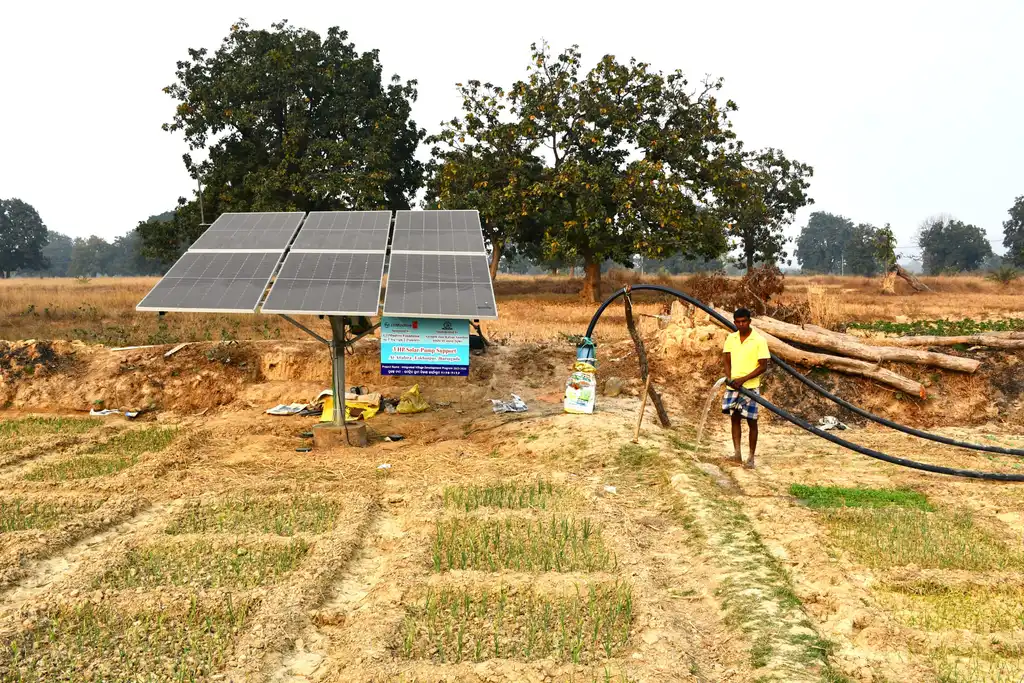
A solar panel array standing in a field in Attabira, with irrigation pipe running out to a newly sown plot
- Solar pump sets installed
- 2Solar pump sets installed
- In two managing groups
- 40 farmersIn two managing groups
- Cropping seasons
- 1 → year-roundCropping seasons
Two solar irrigation pump sets, handed to two farmers' groups of twenty. For Lingaraj Kuanr it meant the first summer crop he has ever grown.
In Kumar and Attabira, farming used to be a bet on the monsoon. Small and marginal farmers had no irrigation at all, so a late or thin rain meant a poor crop and a poorer year. A second crop was not a plan anyone made. Vegetables were out of the question.
Two pumps, two groups
In December 2025, under the Integrated Village Development Programme and with support from the LTIMindtree Foundation, AJKA installed two solar-powered irrigation pump sets in the villages. For the first time, water did not depend on rainfall — or on diesel.
The pump sets were handed to two farmers’ groups of twenty members each, who manage water use, scheduling and maintenance between them. That shared ownership is deliberate: it is what makes the allocation fair, the upkeep somebody’s responsibility, and the asset likely to still be working in ten years.
What it changed
Lingaraj Kuanr farms in Limdihi village in Attabira. He had only ever grown one crop a year, in the rains; summer farming was impossible without water. With the solar pump he cultivated an acre of summer paddy and an acre of vegetables — income and food from land that used to sit idle half the year.
Earlier, we could grow only one crop during the rainy season. Summer farming was impossible due to lack of water. But now, with the solar pump, everything has changed. I am not worried about water anymore — I can plan my crops, my family has fresh vegetables, and I can earn more from the market.
— Lingaraj Kuanr, Limdihi Village, Attabira
His field is one of many. Across both villages the shift is the same one: from waiting to planning, from dependence to control.
Why solar
Running the pumps on sunlight rather than diesel cuts the recurring cost that usually decides whether a poor household irrigates at all — and it does so without adding to the emissions that are making the monsoon less reliable in the first place. Climate-resilient agriculture, in practice, tends to look this plain.