- Farmers mobilised
- 6,000Farmers mobilised
- Producer groups
- 50Producer groups
- High-value crops in FY 2025-26
- 5,363+ acresHigh-value crops in FY 2025-26
- Combined producer company turnover
- ₹50.48 lakhCombined producer company turnover
- Households reported to have doubled income
- 3,021Households reported to have doubled income
The programme has mobilised 3,000 farmers in each block into 25 Producer Groups and one Producer Company, creating an institutional platform for production planning, access to inputs and machinery, aggregation and market linkage.
The District Horticulture Department serves as the nodal agency, while DMF Jharsuguda supports institution-building, capacity-building and facilitation. Physical infrastructure and productive assets are mobilised through convergence with government schemes.
The challenge
Small and marginal farmers often operate individually, limiting their ability to access quality inputs, agricultural technology, irrigation, storage infrastructure and stronger markets. Fragmented production also weakens their negotiating power and makes it difficult to achieve the scale and consistency required for remunerative market linkages.
The APC Programme addresses these constraints by organising farmers into Producer Groups and Producer Companies and developing high-value crop clusters supported by irrigation, farm mechanisation, livestock, horticulture and market infrastructure. The objective is to build sustainable, market-linked livelihoods for poor, tribal and vulnerable farming households.
How the programme works
Farmer institutions & collective action
The programme begins by bringing farmers together into functioning producer institutions that can collectively plan production, access services and engage with markets.
Across the two blocks, 6,000 farmers have been mobilised into 50 Producer Groups, with 25 groups and one Producer Company established in each block. These institutions provide the foundation for input access, aggregation, enterprise development and collective marketing.
High-value & sustainable agriculture
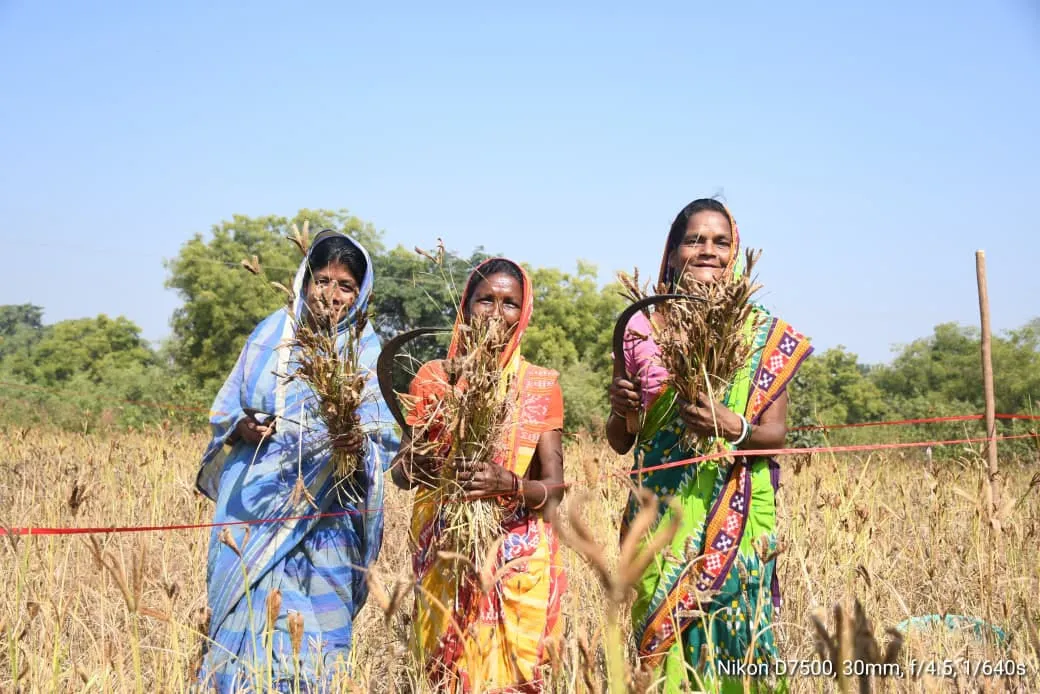
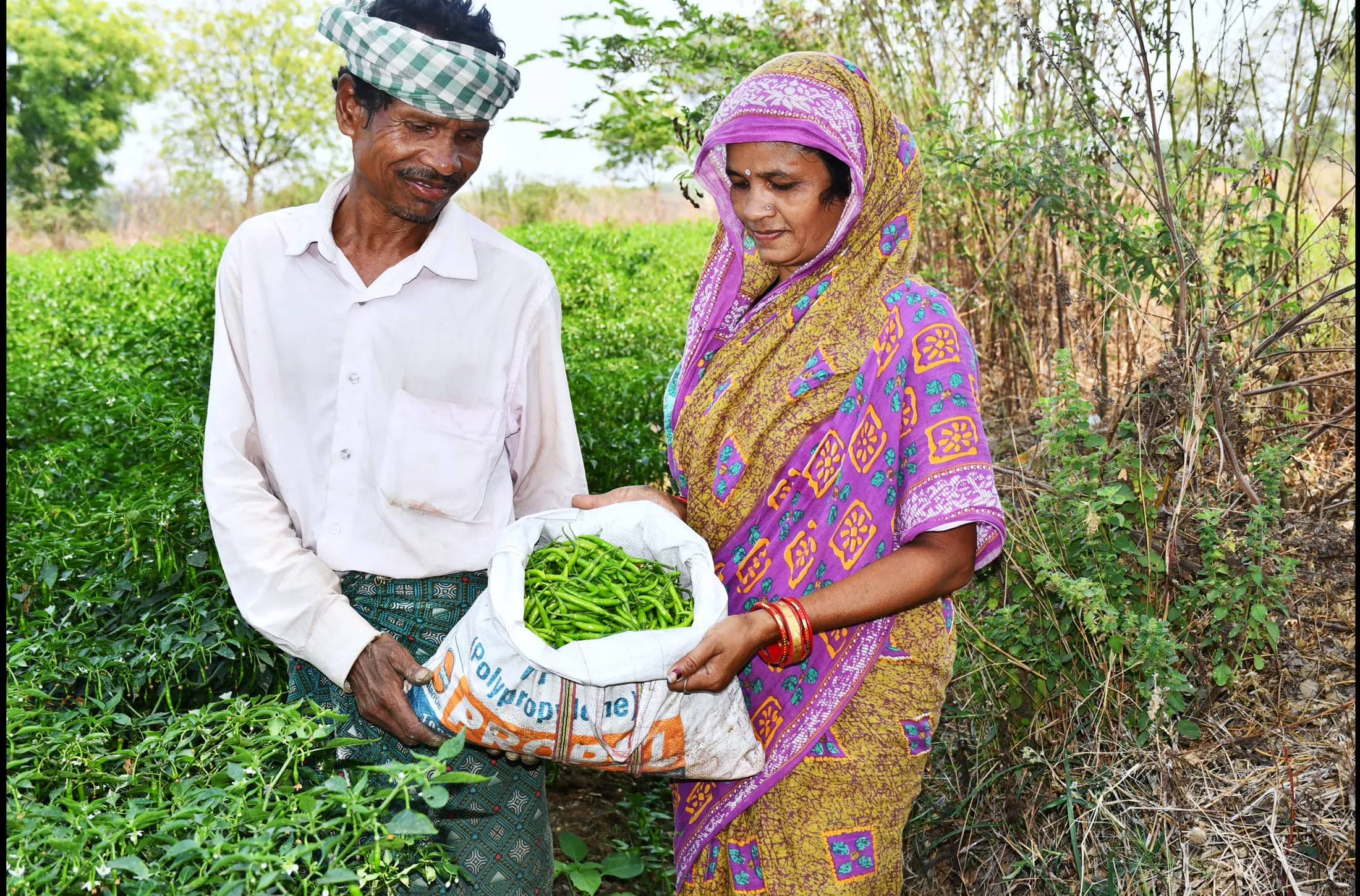
During FY 2025-26, 1,824.46 acres were brought under high-value crops in Jharsuguda Sadar, reaching 1,980 households. In Lakhanpur, high-value crop cultivation expanded across 3,538.59 acres, reaching 2,664 households.
Non-Pesticide Management was also promoted at scale: 953 households in Jharsuguda Sadar and 1,516 households in Lakhanpur adopted NPM practices during the reporting year.
Mechanisation & irrigation
Improved access to machinery and irrigation helps farmers reduce production constraints and increase the reliability and scale of cultivation.
During 2025-26, 2,201 households in Jharsuguda Sadar and 2,592 households in Lakhanpur gained access to farm mechanisation. Lakhanpur also created 1,201 acres of irrigation potential, substantially exceeding its programme target.
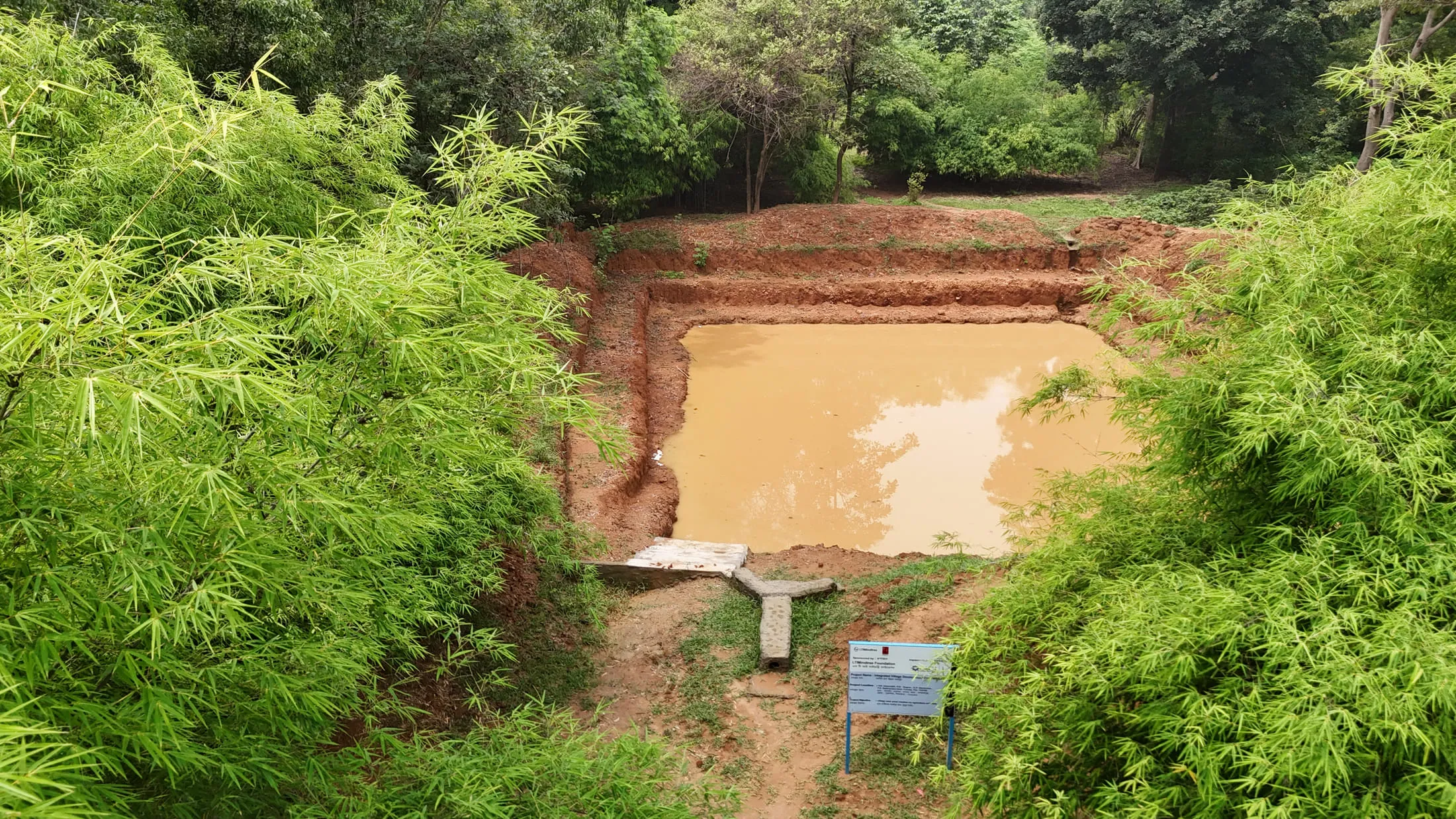
The programme has facilitated micro-irrigation, cluster lifts, borewells, farm ponds, dug wells and other water infrastructure to strengthen productive agriculture.
Market infrastructure & producer companies
Production gains are linked with stronger farmer institutions and market systems.
In Jharsuguda Sadar, the Producer Company recorded a turnover of ₹31.96 lakh with 557 shareholders, and a pack house was established at Baghiaberna village for aggregation, sorting and grading. In Lakhanpur, the Producer Company reached 1,024 shareholders and recorded a turnover of ₹18.52 lakh.
Income enhancement
A central objective of APC is to convert improved production and collective market access into stronger household incomes.
By the FY 2025-26 review, 2,070 households in Jharsuguda Sadar and 951 households in Lakhanpur were reported as having doubled their income. The report also documents individual farmers achieving substantial gains through crop diversification, irrigation and market-linked high-value cultivation.
What we have learned
The programme demonstrates that farmer mobilisation alone is not enough. Strong producer institutions need to be accompanied by synchronised production, access to quality inputs, irrigation, mechanisation, technical capacity and functioning market linkages.
Experience across both blocks also shows the value of building an institutional base first. Once Producer Groups and Producer Companies are functional, interventions around production, aggregation, infrastructure and market access can be scaled more effectively. Progress has been particularly strong in high-value crop coverage, mechanisation, irrigation and NPM adoption.