Agriculture & Livelihood
Sowing quality, harvesting impact — the Indarpur polyhouse
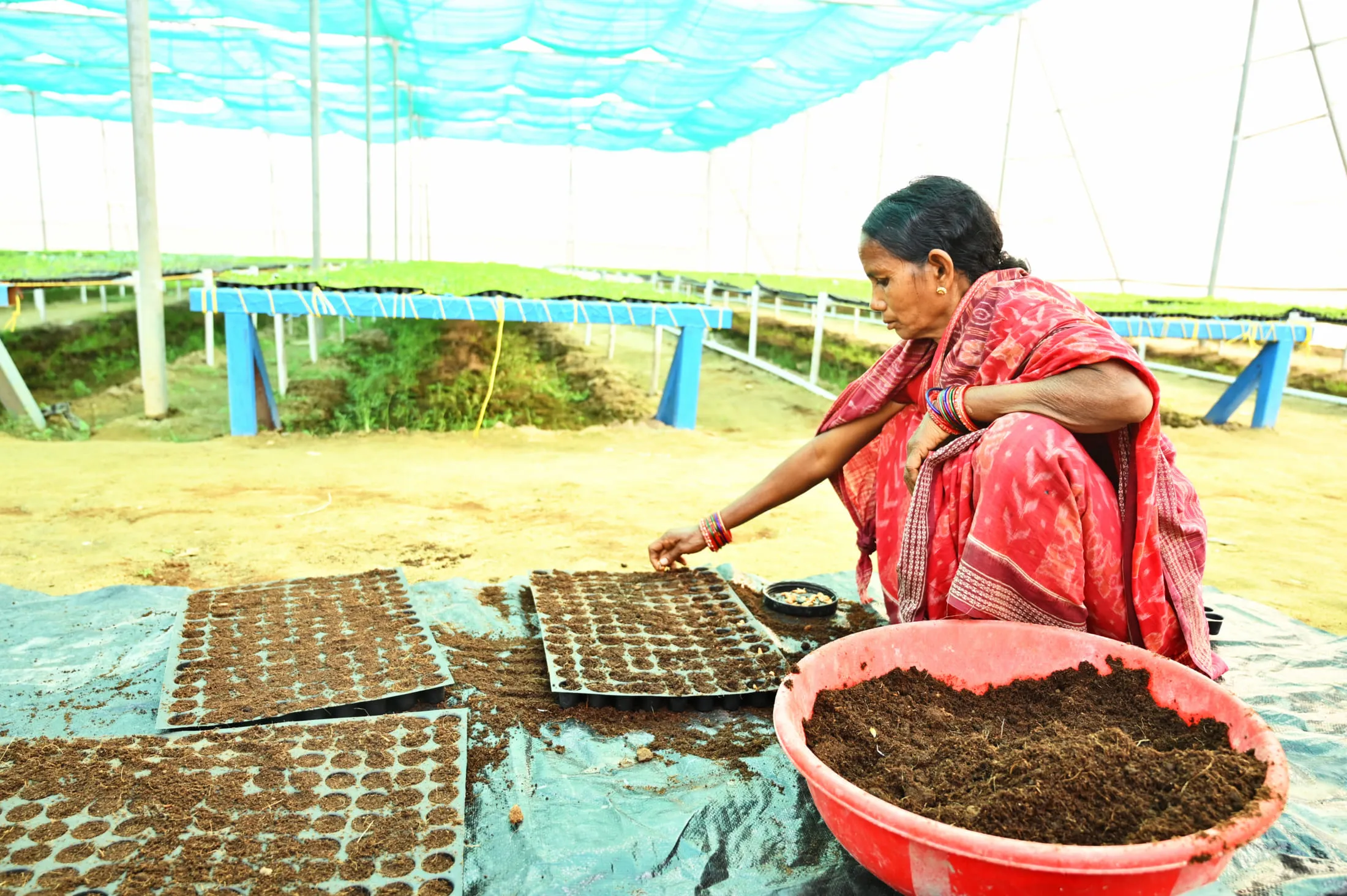
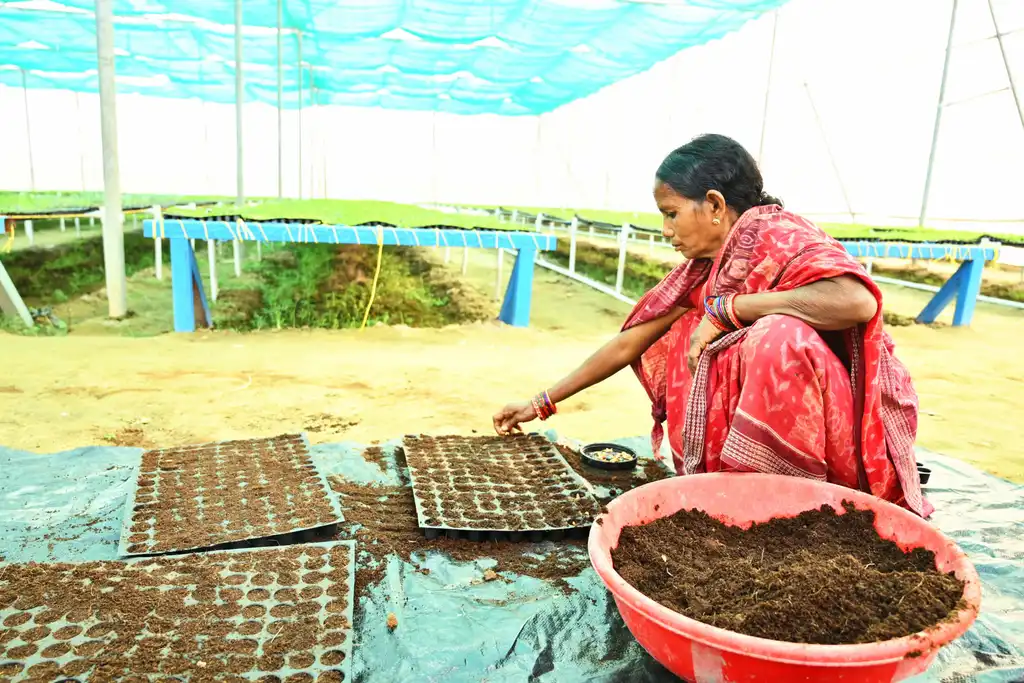
A worker filling seedling trays with potting mix inside the Indarpur polyhouse nursery
- Polyhouse established
- 1,000 sq mPolyhouse established
- Saplings a year capacity
- 12 lakhSaplings a year capacity
- Chilli saplings distributed
- 1.6 lakhChilli saplings distributed
A 1,000 sq m polyhouse with the capacity for 12 lakh saplings a year, run by a farmer producer organisation — so tribal farmers finally buy healthy planting material locally.
Ask a small farmer in Lakhanpur what went wrong with last season’s crop and the answer often starts before planting. Quality horticultural saplings were not available locally. Farmers bought from distant markets and unreliable vendors, paid too much for disease-prone plants, and watched germination rates disappoint them. Growing a better variety was not a real option, and income stayed where it was.
Building the supply locally
The LTIMindtree Foundation supported the construction of a 1,000 sq. metre polyhouse at the Rural Resource Centre in Indarpur, implemented by AJKA. It is built to produce 12 lakh quality saplings a year on scientific nursery practice, and the work of running it doubles as farmer skill development.
The ownership model is the important part. The polyhouse is managed by the Sankalpa Farmer Producer Organisation, which makes it a farmer-led enterprise rather than a facility that happens to sit in a village.
A year’s output
The polyhouse has become the local source of trustworthy planting material:
- 32,000 bitter gourd and 5,000 pumpkin saplings supplied to the Aditya Birla Group, generating ₹1,65,000 in revenue
- 1,60,000 chilli saplings produced and distributed to farmers under the Integrated Village Development Programme in Lakhanpur
That second figure matters as much as the first. A single large buyer proves the quality; the IVDP distribution is what puts the benefit into the hands of the wider farming community.
What farmers report
- Higher crop survival and better yields
- Lower input costs and less risk carried into each season
- More willingness to try improved varieties
- Stronger local value chains and market links
The way forward
Next on the list: grafted vegetable and orchard saplings, more climate-resilient crops, deeper partnerships with NABARD and the government departments, and outreach to farmers further across the region.
CSR funding built the polyhouse. Community ownership is what will keep it running.